
Cashback in the purchase and sale of real estate: What you need to know before signing the contract?


Kapara di kirîn û firotina nekêşbar de: Rêbernameya 2025
Buying and selling real estate is not only an emotional, but also a legally complex process. Among the first steps after the agreement of the buyer and the seller is payment of a lump sum— the amount confirming the seriousness of the intention to purchase the property. In this article we explain what is caper, how it works and what consequences does it haveif one of the parties withdraws from the contract.
In order to protect both the buyer and the seller, Croatian Obligatory Relationships Act (ZOO)Prescribed by the Institute capers, an amount that confirms the seriousness of the agreement and provides additional security to both the Seller and the Buyer in the process of buying or selling real estate. All the details and the entire law on compulsory relations can be found at the linkZOO
Below we give a clear and practical guide on this what is the lump sum, when it is paid, what happens if the Preliminary Agreement or Contract is not realizedand how to avoid the most common mistakes.
What is a lump sum according to the Law on Obligatory Relations?
According to Article 303. Act on Obligatory Relations of the Republic of Croatia, caperis the amount of money that one counterparty gives to the other at the conclusion of the contractas confirmation that the contract will be fulfilled.
In other words, caper:
- confirms the seriousness of the buyer's intention to purchase real estate,
- assures the Seller that the Buyer will not unilaterally withdraw, and that he may suspend further sales
- acts as warranty and insurancefor both sides,
- gives rights to both the Buyer and the Seller, but also obligations
Although the law does not clearly stipulate the amount of the lump sum, most often it is contracted in the amount of 5% to 10% of the total purchase price— and the exact amount in practice is determined by the Buyer and the Sellerby agreement. It can be larger, but also smaller. The amount itself depends on the possibilities of the Buyer, the specifics of the purchase and sale itself, but also the need of the Seller. If the Seller has to buy another property, the money is used for the purchase of another property. Sometimes the Seller has debts that he wants to settle, so he pays the same from the caper. Sometimes the Buyer simply says how much he has and this amount the Seller accepts.
When and how is the caper paid?
The caper is usually paid when signing the Preliminary Agreementon the purchase and sale of real estate. A preliminary contract is concluded in cases where it is not possible to pay the purchase price immediately in full. The most common cases are that the Buyer pays the purchase price through the realization of the loan. Then he pays the lump sum, initiates the procedure for granting the loan and after that when all the conditions for paying the remaining part of the purchase price are met. How is the process of buying real estate through the realization of a loan read in our blog
Of course, there are many more reasons why the Customer pays a lump sum and signs the Preliminary Agreement first. Sometimes the condition is that the Seller must do something in order for the Buyer to pay the purchase price in full.
Sometimes it is contracted and paid at the same time Contracts,if a precontract is not required.
In order for the caper to have legal effect, in The precontract/contract must be clearly stated:
- that it is a down payment (not an advance),
- that the lump sum is a withdrawal (where it is indicated exactly what is considered a withdrawal, as well as the consequences in case of withdrawal for both the Seller and the Buyer)
- the exact amount of the lump sum and the currency in which it is paid (in the Republic of Croatia the means of payment is euro and is mainly paid in euros, if it is another currency it is important to write and what exchange rate applies, since the same conditions will apply in case of refund),
- payment method (cash, payment to the account),
- consequences of termination of the contract.
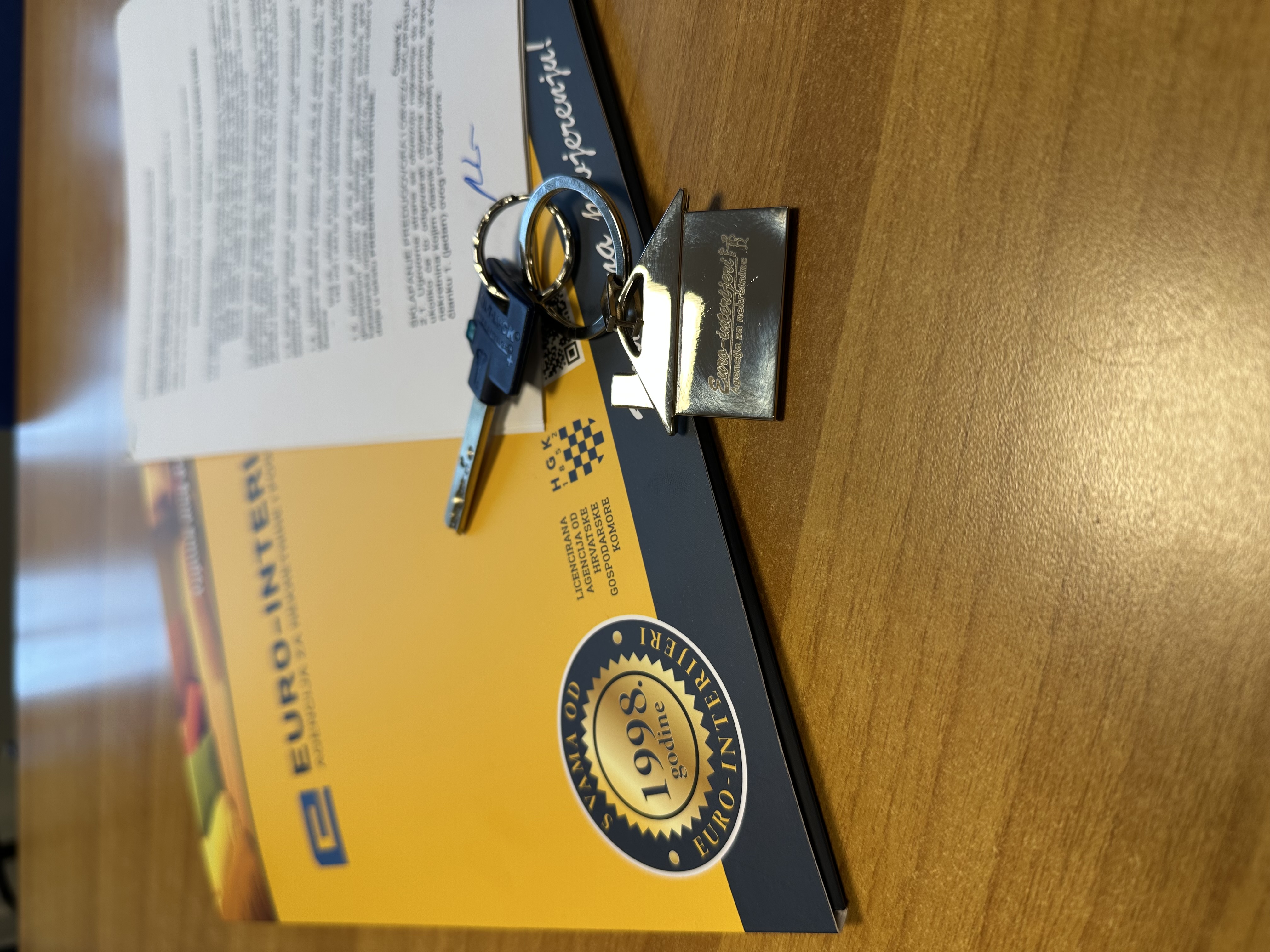
At Euro-interiors real estate agency we avoid verbal agreements, we compulsorily advise our clients to conclude a Precontract/Contract — everything should be written and signed, and the lump sum must be paid to the account of the Seller or his proxy if sold by proxy.
What if there is a termination of the contract?
Caper has legal consequenceswhich is clearly stipulated by the Law on Obligatory Relations
- If The customer gives up, the amount is retained by the Seller. Here it is very important to define well what the Customer's withdrawal means, especially if the rest of the purchase price is paid through the realization of the loan
- If the seller gives up, is obliged to return the caper in double the amount. It is also very important to define what the Seller's withdrawal is.
- If the termination occurs consensualor due to force majeure, it is capped returns to the customer in full.
These provisions provide balance and security for both parties, but only if the caper is clearly agreedand documented by a clear Pre-Contract/Contract. It is important to put all the agreements of the Buyer and the Seller in the Preliminary Agreement in order to avoid any disagreements.
For example, when buying an apartment in a new building, the Buyer pays a lump sum when concluding the Precontract, and if he pays the rest of the purchase price through the realization of the loan, he must agree a period of 60 days for realization, but not from the date of conclusion of the Pre-Contract, but from the day when the Seller obtains a valid Use License, conducts a study on condominium and registers the apartment in the land registers. Because the prerequisite for the realization of a dedicated housing loan is the registration of the mortgage/burden on the property, and in practice the Buyer always wants to write down the burden on the property he buys.
Sometimes we require the Buyer to make payment of the balance of the purchase price conditional upon the Seller's eviction. Then the Buyer is also not obliged to pay the rest of the purchase price if the Seller has not fulfilled his condition and has not moved out.
In practice, we really encounter different situations, and different needs of the Buyer and the Seller. We always try to find a compromise so that both are satisfied and we obligatorily put everything that is agreed in the Preliminary Agreement. Because if there are disagreements, only a clear and defined Pre-Contract in which the rights and obligations of both the Buyer and the Seller are clearly stated can help to settle the injured party, but also to force both parties to adhere to the agreement.
Difference between a down payment and an advance/down payment
In practice, an advance is also called an advance.
In practice, caper is often confused with advance payment. In accordance with the law, the down payment is considered a waiver, while the advance payment is part of the purchase price paid in advance.
In practice, this would mean that the capra is contracted as an absentee. If, for example, the deposit is 10,000.00 EUR, if the Customer cancels, he remains without paying the deposit, i.e. EUR 10,000.00, and if the Seller cancels, he is obliged to return to the Buyer double the amount of the deposit paid, i.e. EUR 20,000.00 (EUR 10,000.00 paid by the Buyer and add another EUR 10,000.00). I explained this in a little more detail because often clients do not understand why the Seller returns 20.000,00 EUR.
If it is an advance, it is not contracted as a waiver and is not subject to sanctions as a lump sum. In case of termination of the Precontract/Contract, the Seller is obliged to return the received amount of advance payment. It is important to define the term and conditions under which the Seller must return the advance to the Buyer.
So, if the contract does not specify that it is capers, the payment is interpreted by law as advancewithout further legal consequences.
Tips for a safe buying and selling
Hire a Licensed Real Estate Agency—
- a professional agency knows how to properly arrange all the details of the purchase and sale, how to keep track of deadlines and protect your interests
- how to organize and prepare a Pre-Contract or Sales Agreement in cooperation with our legal team
- how to check the title deedand the bill of lading in the land registers before payment, but also before signing the Preliminary Agreement, Contract,... check all other documentation from the property, such as the Use and Construction Permit, Energy Certificate...
- agree on the real amount of the lump sum— too large can burden the Buyer, but also the Seller, and too small does not provide sufficient security
- place all your agreements in the written form of the Preliminary Agreement in order to make the purchase and sale legally, safely and stress-free
The caper is more than a symbolic confirmation of the deal -- it is legal instrument of protectionwhich provides security to both the Buyer and the Seller.
In the Croatian legal system, capar has clearly defined consequences, therefore it is important that it is properly contracted, recorded and paid.
Our expert team helps you in every step — from negotiation to signing the Pre-Contract/Contract.
Contact us and find out how to safely sell your property!
Euro-interiors real estate agency — Your reliable partner in the purchase and sale of real estate since 1998!
Contact us with confidence!
www.euro-interijeri.hr